Exstream Energy Solutions Calibration Cans
in Uganda, Kenya, Tanzania, Sudan,
Somalia, Burundi, Rwanda, and Congo:
Accurate fuel measurement is essential wherever petroleum products are bought, stored,
transported or dispensed. For petrol stations, fuel depots, transport fleets, construction
companies, farms, mining operations and industrial facilities, knowing that a fuel dispenser is
delivering the quantity displayed on its meter is an important part of fuel control.
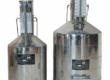
A calibration can, also known as a fuel measuring can or proving measure, provides a practical
reference for checking the accuracy of fuel dispensing equipment. It allows technicians and fuel
station operators to compare the quantity indicated by a dispenser with a known measured
volume.
As fuel businesses operations continue to expand across East Africa, reliable measurement
equipment is increasingly important for maintaining accurate dispensing and better fuel
accountability. Businesses looking for calibration cans in Uganda, Kenya, Tanzania, Sudan,
Somalia, Burundi, Rwanda, and Congo need equipment that is suitable for their application,
easy to use and supported by appropriate calibration and technical services.
What Is a Calibration Can Used For?
A calibration can is a precision measuring container used to provide a known reference volume
when testing fuel dispensing and measurement equipment. During a pump accuracy check, fuel
is dispensed into the can and the measured volume is compared with the quantity displayed by
the pump.
This simple process can help identify whether a dispenser is:
- Delivering the expected quantity.
- Over-dispensing.
- Under-dispensing.
- Showing inconsistent measurements.
- Developing an accuracy problem.
- Requiring further inspection or calibration.
The calibration can therefore act as a practical reference during fuel pump testing.
In Kenya, the Weights and Measures Rules provide that dispensing pumps are tested under
practical working conditions using standard measures, testing equipment or gravimetric methods.
The rules also require dispensing pumps to have a calibration device that permits adjustment of
the relationship between indicated and actual quantity.
Why Fuel Dispenser Accuracy Matters
Fuel is normally purchased and sold according to volume. A small measurement difference may
appear insignificant during one transaction, but repeated differences across thousands of litres
can have a substantial financial impact.
Accurate pump measurement can help businesses:
- Improve fuel accountability.
- Reduce measurement-related losses.
- Verify fuel dispenser performance.
- Support stock reconciliation.
- Identify over-dispensing and under-dispensing.
- Improve customer confidence.
- Support maintenance decisions.
- Strengthen overall wet-stock management.
For high-volume fuel stations and depots, measurement accuracy becomes particularly important
because even a small variance can accumulate over time.
Calibration Cans for Petrol Stations
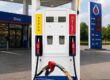
Petrol stations are among the most common users of calibration cans. A measuring can provides
a straightforward way of checking the quantity delivered by individual fuel nozzles.
For example, a technician can dispense a specified volume into the measuring can and compare
the actual measurement against the quantity displayed by the dispenser.
The process can be repeated for different nozzles and fuel products to identify differences in
performance.
This makes calibration cans useful during:
- Routine pump accuracy checks.
- Pump calibration exercises.
- Equipment maintenance.
- Investigation of suspected over-dispensing.
- Investigation of suspected under-dispensing.
- New equipment commissioning.
- Post-repair verification.
Exstream Energy Solutions in Kenya, Uganda, Tanzania, Sudan, Somalia, Burundi,
Rwanda, and Congo provides fuel measurement equipment and petroleum solutions for
businesses operating across different fuel-handling environments.
Calibration Cans for Fuel Depots and Bulk Fuel Operations
Fuel measurement requirements are not limited to petrol stations.
Fuel depots and bulk storage facilities handle large quantities of petroleum products, making
accurate measurement important at different points in the fuel supply chain.
Calibration and measuring equipment can support measurement checks during:
- Fuel loading.
- Fuel unloading.
- Bulk transfers.
- Equipment testing.
- Meter verification.
- Maintenance activities.
For large-volume operations, calibration cans should be considered as part of a broader
measurement and control strategy rather than as a standalone solution.
A calibration can is therefore one of the practical tools that can be used during a wider fuel
dispenser testing and calibration process.
Exstream Energy Solutions in Kenya, Uganda, Tanzania, Sudan, Somalia, Burundi,
Rwanda, and Congo provides calibration-related equipment and services designed to support
fuel measurement and petroleum operations.
Calibration Cans for Fleets, Farms and Remote Sites
Fuel measurement is also important for organizations that operate their own fuel storage and
dispensing facilities.
Transport companies may need to monitor fuel issued to vehicles. Farms may need to track
diesel supplied to tractors and irrigation equipment. Construction and mining companies may
need to monitor fuel issued to heavy machinery at remote sites.
In these environments, a calibration can, can support periodic checks of dispensing equipment
and help ensure that recorded fuel quantities remain reliable.
Businesses sourcing calibration cans in Uganda, Kenya, Tanzania, Sudan, Somalia,
Burundi, Rwanda, and Congo can select equipment according to their fuel system, required
test volume and operational environment.
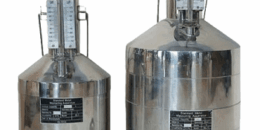
10-Litre and 20-Litre Calibration Cans
Calibration cans are available in different capacities depending on the intended application.
Two commonly used options are:
10-Litre Calibration Can
A 10-litre measuring can, can be suitable for applications where a smaller reference volume is
practical for testing and verification.
20-Litre Calibration Can
A 20-litre calibration can provides a larger reference volume and may be useful for applications
where testing with a higher volume is preferred.
The appropriate capacity depends on the dispensing equipment, testing procedure and applicable
requirements.
Exstream currently lists 10L and 20L calibration cans for sale in East Africa, providing
options for fuel measurement and pump testing applications.
What Makes a Good Calibration Can?
This is how you can choose a Good Calibration Can when purchasing it, businesses should look
beyond capacity and price.
Important considerations include:
1. Accurate Graduations-The measurement markings should be clear and easy to read.
Accurate graduations are essential when comparing the actual volume with the pump
indication.
2. Durable Construction-A fuel measuring can should be manufactured from suitable,
durable material capable of handling the intended application.
3. Practical Design-The can should be easy to handle, position and empty during fuel
testing.
4. Suitable Capacity-The selected capacity should correspond to the testing procedure
and dispensing system.
5. Calibration and Verification-Where applicable, the measuring equipment should
have appropriate calibration or verification documentation.
6. Supplier Support- A supplier with knowledge of fuel measurement and calibration
can help businesses select equipment suitable for their specific application.
Calibration Cans and Fuel Loss Prevention
Fuel-handling requirements vary between petrol stations, depots, fleets, farms, construction sites
and industrial facilities. Businesses looking for calibration cans in Uganda, Kenya, Tanzania,
Sudan, Somalia, Burundi, Rwanda, and Congo can select equipment based on their specific
fuel system, required test volume and operating environment.
A calibration can does not identify every possible source of fuel loss. However, regular dispenser
accuracy checks can help eliminate one important source of uncertainty: inaccurate fuel
dispensing.
When pump testing is combined with:
- Tank calibration.
- Pump calibration.
- Flow meter calibration.
- Wet-stock monitoring.
- Delivery reconciliation.
- Regular stock checks.
businesses can develop a stronger approach to fuel-loss investigation and prevention.
Exstream Energy Solutions in Kenya, Uganda, Tanzania, Sudan, Somalia, Burundi,
Rwanda, and Congo provides petroleum equipment and related fuel-management solutions for
businesses handling fuel across the region.
The company also provides pump and meter calibration services and states that its technicians
use calibrated equipment to check pump accuracy and flow rate.
Why Choose Exstream Energy Solutions?
Selecting a calibration can is only one part of achieving reliable fuel measurement. Businesses
also need access to appropriate equipment, technical knowledge, maintenance and calibration
services.
Exstream Energy Solutions in Kenya, Uganda, Tanzania, Sudan, Somalia, Burundi,
Rwanda, and Congo supports fuel-related operations with measurement equipment and
petroleum solutions for petrol stations, depots, fleets, industrial facilities, farms, construction
sites and other fuel users.
The company offers calibration cans alongside other fuel equipment and calibration services,
allowing businesses to source related solutions from one supplier. Its website currently lists 10L
and 20L calibration cans among its fuel measurement products.