Every litre of fuel represents money, and inaccurate measurements can have a significant impact
on business profitability. For companies involved in petroleum storage, transportation,
distribution, and industrial operations, knowing the actual quantity of fuel in a tank is essential
for effective inventory management.
As petroleum-related businesses expand across East Africa, reliable tank calibration is
becoming increasingly important. Businesses operating in Ethiopia, Sudan, Somalia and Burundi
need dependable fuel measurement systems to monitor stock, verify deliveries, and make
informed purchasing decisions.
At Exstream Energy Solutions, we provide tank calibration services designed to help
businesses improve measurement accuracy, maintain reliable inventory records, and manage
their fuel storage systems more effectively.
What Is Tank Calibration and How Does It Work?
Tank calibration is the process of determining the volume of liquid a storage tank holds at
different measured liquid levels. It accounts for factors such as tank dimensions, shape,
construction, and other characteristics that influence its capacity.
The calibration results are usually presented in a tank calibration chart or table. This enables
operators to convert dipstick readings or compatible tank monitoring measurements into
corresponding fuel volumes.
For example, when a fuel tanker delivers petroleum products to a depot, the receiving team needs
accurate measurements to establish the available stock before and after offloading. A properly
calibrated tank provides reliable reference data for comparing readings and investigating
differences.
For companies managing fuel storage facilities in Tanzania, Rwanda, and Uganda, dependable
calibration records can support better stock reconciliation and more informed operational
decisions.
Why Is Tank Calibration Important Across East Africa?
1. Improves Fuel Measurement Accuracy
Accurate fuel measurement is essential for businesses that purchase, store, transport, or dispense
petroleum products. Even small measurement errors can create discrepancies between recorded
inventory and the actual quantity of fuel available.
Professional tank calibration establishes a reliable relationship between liquid levels and tank
volumes. This helps operators obtain more dependable readings and maintain accurate fuel stock
records.
Businesses in East Africa can benefit from appropriate calibration procedures that support
consistent measurement and inventory management.
2. Helps Identify Potential Fuel Losses
Fuel discrepancies can result from leakages, theft, delivery variations, temperature-related
volume changes, or measurement errors. Without reliable tank measurements, identifying the
cause of these differences can be difficult.
Calibration provides a dependable reference for comparing measured stock with recorded
inventory. When unexplained variations occur, businesses can investigate them using delivery
documents, dispensing records, physical inspections, and other relevant information.
For petroleum businesses operating in Ethiopia, Sudan and Somalia, accurate measurement data
can strengthen fuel accountability and help identify potential problems earlier.
It is important to remember that calibration does not automatically prevent theft or detect leaks.
Instead, it improves the reliability of measurements used to investigate possible losses.
3. Supports Regulatory Compliance and Documentation
Petroleum storage and measurement operations may be subject to regulatory requirements,
technical standards, and inspection procedures. Maintaining accurate calibration records can help
businesses demonstrate how tank volumes are determined and support their measurement
management processes.
The specific requirements depend on the type of tank, its intended use, and the applicable
regulations in each jurisdiction. Businesses should confirm the relevant requirements with the
appropriate authorities and qualified service providers.
Companies handling petroleum products in Tanzania, Rwanda, and Uganda should ensure that
their calibration procedures and documentation meet the requirements applicable to their
operations.
4. Strengthens Fuel Delivery Verification
Receiving bulk fuel requires accurate measurements and proper documentation. Businesses need
to compare delivery quantities with the changes recorded in their storage tanks to identify
possible discrepancies.
Accurate dipsticks helps operators interpret tank readings. This improves stock reconciliation
and supports investigations when recorded quantities do not match expected results.
For oil marketing companies, fuel depots, and bulk petroleum consumers in Ethiopia, Sudan,
Somalia and Burundi, reliable tank measurements can improve accountability throughout the fuel
supply chain.
5. Improves Operational Efficiency and Cost Control
Fuel inventory affects purchasing decisions, budgets, distribution schedules, and daily business
operations. Inaccurate stock information may result in unnecessary purchases, delayed deliveries,
or unexpected fuel shortages.
With dependable tank measurements, businesses can monitor available stock, estimate
consumption, and plan replenishment more effectively.
Organisations operating in East Africa can use accurate calibration data alongside consumption
records to support better procurement planning, cost control, and operational efficiency.
Types of Tank Calibration Services
Different tanks require different calibration approaches. The appropriate method depends on the
tank’s design, dimensions, installation, intended use, and applicable technical requirements.
Fuel Storage Tank Calibration
Fuel storage tanks are commonly used at petrol stations, fuel depots, industrial facilities,
commercial sites, and distribution centres. Calibration establishes the relationship between the
fuel level and its corresponding volume, enabling operators to monitor stored quantities more
accurately.
Businesses in Sudan, Burundi, Somalia, and Uganda that handle bulk petroleum products can use
reliable calibration records to strengthen inventory management and stock verification.
Above-Ground and Underground Tank Calibration
Above-ground and underground fuel tanks differ in their installation, accessibility, and
measurement considerations. These factors influence the suitable calibration method and the
procedures required to obtain reliable results.
Proper calibration helps businesses establish accurate tank capacity information and improve fuel
monitoring, regardless of whether the tank is installed above or below ground.
For companies operating storage facilities in Burundi, Tanzania, Rwanda, and Uganda, selecting
an appropriate calibration approach is an important step towards dependable fuel measurement.
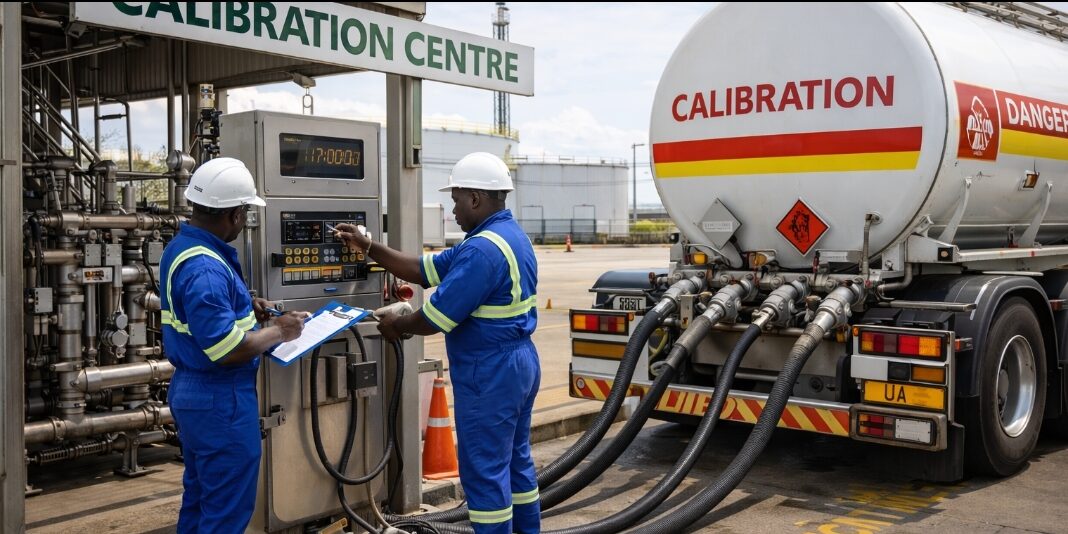
Road Tanker Calibration
Road tankers transport petroleum products between fuel depots, petrol stations, and commercial
customers. Their compartments must be measured appropriately to establish the relationship
between liquid levels and volumes.
Road tanker calibration supports quantity verification, delivery documentation, and fuel
transportation accountability. The selected method must account for the tanker's design,
compartment arrangement, and relevant technical requirements.
Businesses involved in petroleum transportation in East Africa can benefit from reliable tanker
measurement records as part of their wider fuel management procedures.
Why Choose Exstream Energy Solutions for Tank
Calibration?
Selecting a dependable calibration service provider is essential for maintaining accurate
measurements and reliable fuel inventory records.
Exstream Energy Solutions provides tank calibration services to help businesses improve fuel
measurement and manage their storage operations more effectively.
When discussing your calibration requirements with our team, you can explore solutions that
support:
- Measurement accuracy: Establishing reliable tank capacity and volume reference data.
- Inventory management: Improving the quality of fuel stock measurements and
reconciliation. - Fuel accountability: Supporting investigations into unexplained stock discrepancies.
- Technical guidance: Understanding how calibration records can be applied to everyday
fuel management. - Operational requirements: Identifying an appropriate calibration approach for your tank type and intended use.
Whether your business serves customers in Sudan, Somalia, Burundi or Tanzania, it is important
to select a provider capable of addressing your particular tank measurement requirements and
applicable local standards.
Contact Exstream Energy Solutions to discuss the services available for your facility and
determine the most suitable approach for your operations.
How Often Should Fuel Tanks Be Calibrated?
There is no single calibration interval that applies to every tank. The appropriate frequency
depends on the tank’s purpose, regulatory requirements, operating conditions, and measurement
needs.
Recalibration or additional verification may be necessary after significant repairs, structural
modifications, relocation, or other changes that could affect tank capacity or measurement
accuracy.
Businesses should maintain their calibration records, carry out routine tank inspections, and
consult qualified service providers to determine when further calibration is required.
Organisations managing petroleum storage systems should also confirm any country-specific
requirements governing their tanks and measurement equipment.
Best Practices for Maintaining Accurate Fuel Measurements
To get the most value from tank calibration, businesses should combine professional
measurement services with consistent inventory management practices.
Recommended practices include:
- Schedule calibration and verification according to applicable requirements.
- Use the correct calibration chart for each tank.
- Train employees to follow consistent fuel measurement procedures.
- Inspect tanks and associated equipment for damage or leakage.
- Record fuel receipts, transfers, dispensing, and stock measurements accurately.
- Investigate unexplained discrepancies promptly.
- Maintain calibration documentation and relevant technical records.
- Review measurement procedures whenever equipment or operating conditions change.
These practices help businesses maintain dependable fuel records and make better-informed
decisions about storage, procurement, and distribution.
Get Professional Tank Calibration Services for Your
Business
Reliable fuel measurement is an essential part of running an efficient petroleum operation.
Whether you manage a fuel station, operate a bulk storage depot, transport petroleum products,
or store fuel for industrial use, accurate tank calibration provides a stronger foundation for
inventory control.
Exstream Energy Solutions is committed to helping businesses improve fuel measurement
accuracy, strengthen stock accountability, and manage their storage systems more effectively.
If your business operates across East Africa, contact our team to discuss your tank calibration
requirements, the services available for your facility, and the applicable technical standards.
Conclusion
Tank calibration plays an important role in accurate fuel measurement, reliable inventory
records, and effective petroleum management. It helps businesses establish tank capacity, verify
fuel quantities, investigate stock discrepancies, and improve operational planning.
For businesses in East Africa, reliable calibration data can support stronger inventory control and
more informed business decisions.
Partner with Exstream Energy Solutions to discuss your tank calibration needs and take
practical steps towards better fuel measurement, accountability, and operational efficiency.